


Mehndi and Haldi Hindu pre-wedding event Photography
Mehndi and Haldi – Hindu pre-wedding event photography
The Mehndi (Mehndi Party / Mehndi night)
The Mehndi ceremony is a significant and joyous pre-wedding ritual in Hindu, Sikh, and Muslim traditions, celebrated across South Asia and beyond. This colorful and festive event usually takes place a day or two before the wedding day and is dedicated to the application of intricate henna designs on the bride’s hands and feet. Here’s a more detailed exploration of the Mehndi ceremony:
Symbolism of Mehndi: Mehndi holds deep cultural and symbolic significance. The application of henna is believed to bring good luck, prosperity, and ward off evil spirits. The deep red-brown color that the Mehndi stain leaves on the skin is considered auspicious and is thought to symbolize the strength of the marital bond.
Preparation of Mehndi Paste: The Mehndi paste is traditionally made by grinding henna leaves into a fine powder and mixing it with water, lemon juice, and essential oils. Some families may add other natural ingredients like tea leaves or sugar to enhance the color and longevity of the Mehndi stain.
Application Process: Professional Mehndi artists or skilled family members apply the Mehndi paste using cones to create intricate and elaborate patterns on the bride’s hands and feet. These designs often include traditional motifs such as paisleys, flowers, peacocks, and geometric patterns. The application process is not only a beautification ritual but also a time for bonding between the bride and her female relatives and friends.
Guest Participation: While the focus is on the bride, it’s common for female guests, including family members and friends, to also participate in the Mehndi application. This fosters a sense of unity and celebration among all the women present.
Mehndi Night Celebrations: The Mehndi ceremony is often accompanied by a Mehndi night or Sangeet, which is a music and dance celebration. Friends and family members perform traditional dances and sing songs, creating a festive and lively atmosphere. It’s a time for laughter, music, and cultural performances that bring everyone together in celebration.
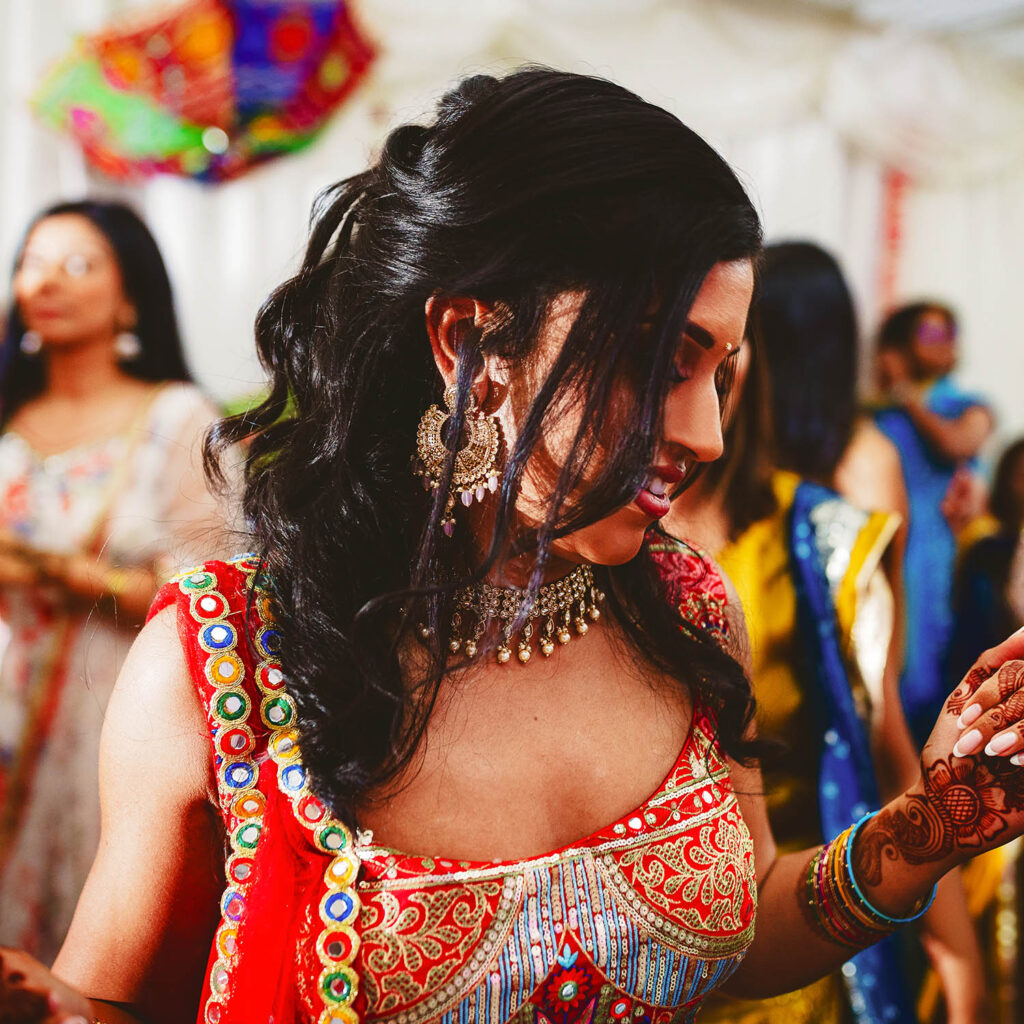
Bridal Attire and Jewelry: The bride typically wears vibrant and culturally rich attire for the Mehndi ceremony, often choosing a color that complements the Mehndi stain. The bridal jewelry, including earrings, bangles, and anklets, is carefully selected to enhance the overall look.
Post-Application Rituals: Once the Mehndi paste has dried, a mixture of lemon juice and sugar may be applied to intensify the color and longevity of the Mehndi stain. The bride is then advised to keep her hands and feet warm for a few hours to enhance the staining process.
Anticipation and Tradition: The Mehndi ceremony is filled with anticipation and excitement as everyone eagerly awaits the darkening of the Mehndi stain. It is a tradition for the bride to refrain from performing household chores until the Mehndi has faded, symbolizing the community’s support and care for her during this special time.
The Mehndi ceremony is not only a beautiful and artistic tradition but also a celebration of love, cultural heritage, and the coming together of families in the lead-up to the wedding day. The intricate Mehndi designs tell a story, reflecting the unique journey and personality of the bride.

The Haldi ceremony is a significant pre-wedding ritual in Hindu culture, celebrated mainly in North India. Occurring a day or two before the wedding, it involves applying a paste made from turmeric, sandalwood, and other ingredients on the bride and groom. Turmeric’s cleansing properties are believed to bring a natural glow, purify the body, and ward off evil spirits. The yellow colour symbolises prosperity and fertility.
During the ceremony, a special paste is prepared and applied to the couple’s faces, necks, and arms. Family and friends take turns smearing the paste, accompanied by traditional songs and dances. The ritual signifies purification and blessings for the couple, while the yellow color represents purity and the start of a new life.
After the paste application, the couple waits for it to dry, followed by a ceremonial bath. The yellow water is considered auspicious. Post-bath, the couple is dressed in new clothes and receives gifts. The Haldi ceremony is a blend of fun, symbolism, and tradition, making it a memorable and cherished part of Hindu wedding festivities.